Why Listening Skills Matter Before Children Learn to Read
Long before children begin recognising letters or reading simple words, they are developing one of the most important foundations for learning: listening. While parents often focus on reading readiness, listening skills play a vital role in helping children understand language, follow instructions, communicate effectively, and make sense of the world around them.
If you have ever found yourself wondering, “My child hears me, but does not seem to listen,” you are not alone. Listening is a skill that develops gradually and requires practice, guidance, and meaningful learning experiences.
At HFSE YoungStarters, children strengthen listening skills through programmes such as Move & Groove and Language Explorers, where music, movement, storytelling, and purposeful interactions help build strong foundations for future learning.
Understanding the Difference Between Hearing and Listening
Hearing and listening are often confused, but they are not the same thing.
Hearing happens naturally when sounds enter the ears. Listening, however, requires children to pay attention, process information, remember what they hear, and respond appropriately.
For young children, listening is an active skill that develops over time. It involves concentration, memory, language processing, and self-regulation. These abilities become increasingly important as children prepare for more structured learning environments.
Why Listening Skills Are Important for Early Learning
Strong listening skills support many areas of a child’s development.
When children learn to listen attentively, they are better able to:
- Understand spoken language
- Follow instructions
- Participate in conversations
- Build vocabulary
- Develop comprehension skills
- Learn new concepts and ideas
Listening also forms an important foundation for literacy development. Before children can read independently, they must first be able to understand and make meaning from spoken language.
Supporting Language Development and Communication
Listening and language development go hand in hand.
Children learn new words, sentence structures, and communication patterns by listening to the people around them. Through conversations, songs, stories, and group activities, children gradually expand their vocabulary and improve their understanding of language.
Good listening skills also help children become better communicators. By listening carefully to others, children learn how conversations work, how questions are answered, and how ideas are shared.
Following Instructions with Confidence
One of the most visible signs of developing listening skills is a child’s ability to follow directions.
Whether a teacher asks children to line up, tidy away materials, or complete a simple task, listening helps children understand what is expected of them. As listening skills improve, children become more confident in responding to instructions and participating independently in daily routines.
This confidence supports a positive learning experience both at school and at home.
How Music and Movement Strengthen Listening Skills
Music provides a fun and engaging way for children to develop listening abilities.
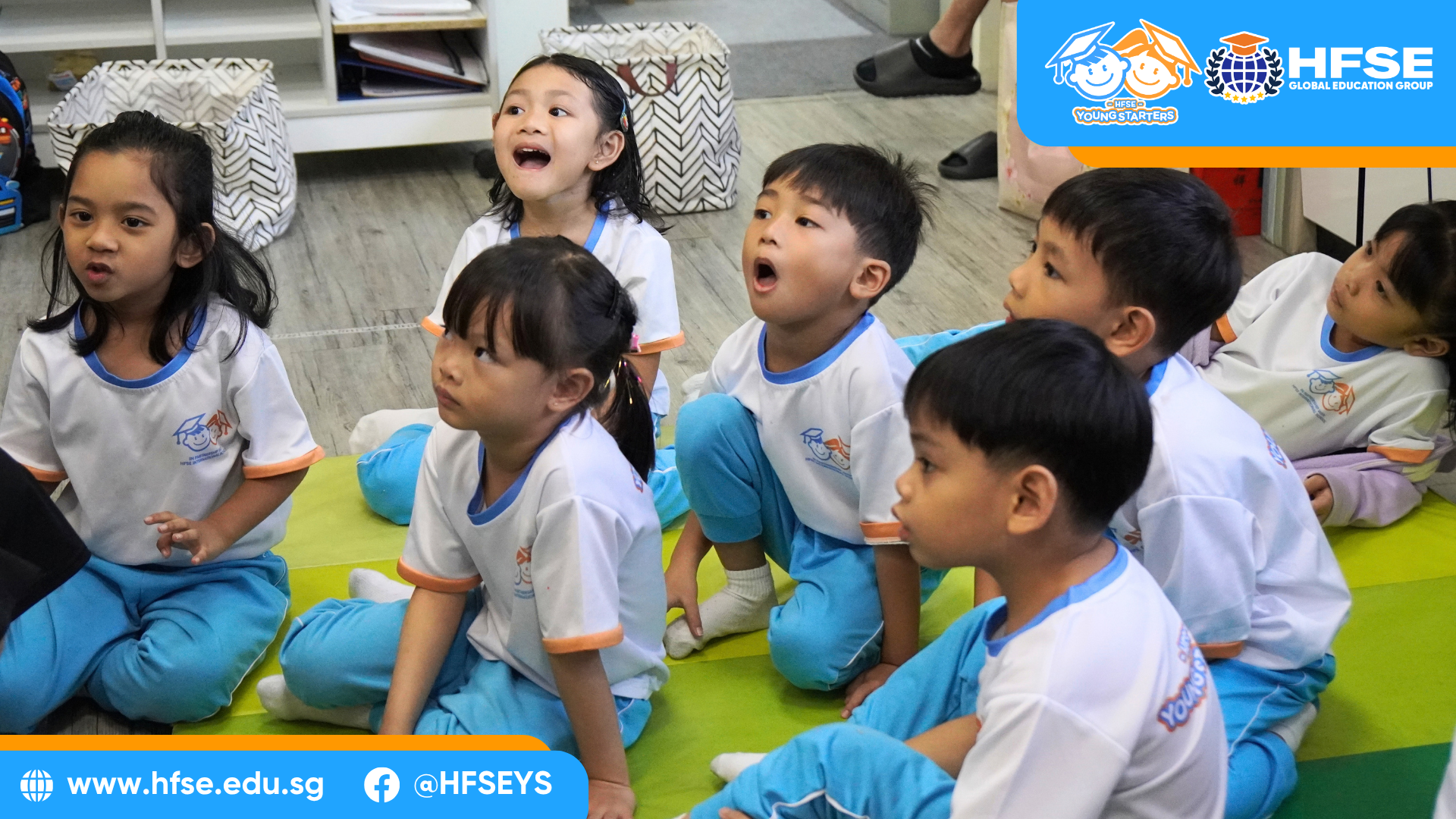
When children sing songs, follow rhythms, or participate in action-based activities, they learn to listen carefully and respond to auditory cues. They begin to notice patterns, recognise changes in sounds, and coordinate their actions with what they hear.
Through the Move & Groove programme at HFSE YoungStarters, children participate in musical experiences that strengthen attention, memory, coordination, and listening skills while making learning enjoyable and meaningful.
The Role of Storytelling and Conversations
Stories and conversations offer valuable opportunities for children to practise listening with purpose.
As children listen to stories, they learn to focus on details, follow sequences, and understand meaning. Conversations encourage children to listen to others, wait for their turn to speak, and respond thoughtfully.
Through the Language Explorers programme, children are immersed in language-rich experiences that support vocabulary growth, communication skills, and active listening. These meaningful interactions help prepare children for future literacy and learning success.
Simple Ways Parents Can Support Listening Skills at Home
Developing listening skills does not require complex activities. Small everyday interactions can make a big difference.
Parents can support listening development by:
- Reading stories together regularly
- Singing songs and nursery rhymes
- Having meaningful conversations throughout the day
- Giving simple instructions one step at a time
- Playing listening and memory games
- Encouraging children to retell stories or experiences
These activities help children practise focusing, remembering information, and responding appropriately.
Building Strong Foundations for Future Reading
Listening is one of the earliest literacy skills children develop. Before children can recognise letters, understand written words, or read independently, they must first learn to listen, understand, and communicate.
At HFSE YoungStarters, we recognise the importance of building these foundational skills through engaging and purposeful learning experiences. Through Move & Groove and Language Explorers, children strengthen the listening abilities that support communication, confidence, and future academic success.
By nurturing listening skills from an early age, we help children become active learners who are ready to engage with language, literacy, and the world around them.
👉 Book an Open House
To learn more about HFSE YoungStarters and our nurturing early years environment, visit our Facebook page or contact us at +65 8200 0062 for further enquiries. We look forward to being part of your child’s journey as they learn, grow, and thrive through joyful experiences.