The Power of Play-Based Learning
Play is not a break from learning. For young children, play-based learning is how growth and discovery happen every day.
In the early years, children explore the world through curiosity and imagination. They learn by trying new ideas, making mistakes, and testing possibilities. Through play-based learning, children develop knowledge, skills, and confidence in ways that they feel natural and meaningful.
At HFSE YoungStarters, play sits at the heart of our learning approach. Children grow, explore, and thrive when learning feels engaging, joyful, and purposeful.
What Is Play-Based Learning?
Play-based learning is an approach where children learn through hands-on experiences. These experiences are guided by curiosity, exploration, and enjoyment rather than pressure or fixed outcomes.
Instead of focusing only on formal instruction, children investigate ideas through play. They build, pretend, experiment, and create. As a result, learning becomes more active than passive.
This approach respects how young children develop. It allows children to learn at their own pace while building skills across cognitive, social, emotional, and physical areas.
Why Play Is Essential in Early Childhood
Play supports development in ways that other approaches cannot achieve on their own.
Encouraging Active Thinking
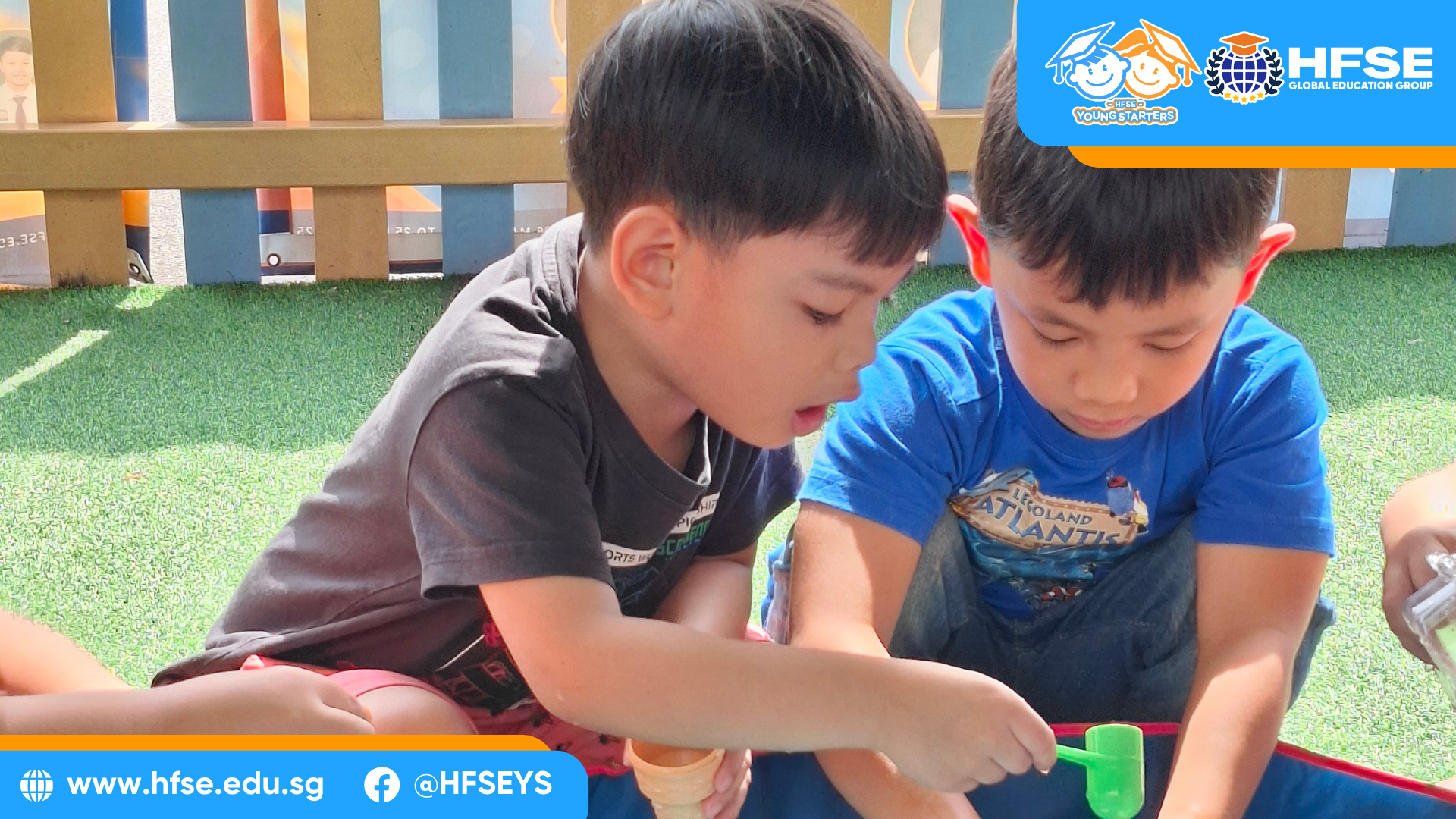
During play, children ask questions and explore solutions. For example, they build structures, test ideas, and role play every day experiences. Through these actions, children think actively instead of simply receiving information.
As a result, problem solving and reasoning skills develop naturally.
Building Language and Communication
Play creates rich opportunities for communication. Children describe their actions, share ideas, and negotiate roles with others. Over time, vocabulary grows and confidence in speaking increases.
In addition, listening skills improve as children interact during shared play experiences.
Supporting Emotional and Social Development
Through play, children practise cooperation and turn taking. They also explore empathy and friendship in a safe environment.
For example, pretend play allows children to manage emotions and understand different perspectives. These experiences support emotional awareness and social confidence.
Strengthening Physical and Motor Skills
Many play-based activities involve movement and coordination. Children climb, dance, draw, pour, and construct. Each movement strengthens both gross and fine motor skills.
These physical experiences support everyday tasks and prepare children for future learning.
Play-Based Learning and Imagination
Imaginative play plays a powerful role in early learning. When children pretend, they explore ideas beyond their immediate experience.
A box can become a house, a shop, or a vehicle. Through these imagined scenarios, children practise creativity and flexible thinking. Confidence in self-expression also grows.
At the same time, imaginative play supports emotional development. Children often replay experiences through pretend play to make sense of the world around them.
How Play Prepares Children for School and Life
Play-based learning builds strong foundations for future learning.
Through regular play, children develop:
- Curiosity and enjoyment of learning
- Independence and decision-making skills
- Problem solving and perseverance
- Confidence to try new activities
- Positive attitudes towards collaboration
Rather than rushing academic outcomes, play-based learning supports long term success by strengthening these core skills.
Play-Based Learning at HFSE YoungStarters
At HFSE YoungStarters, play is carefully planned and thoughtfully guided. Educators observe children closely and listen to their interests. Learning is then extended through meaningful questions and inviting environments.
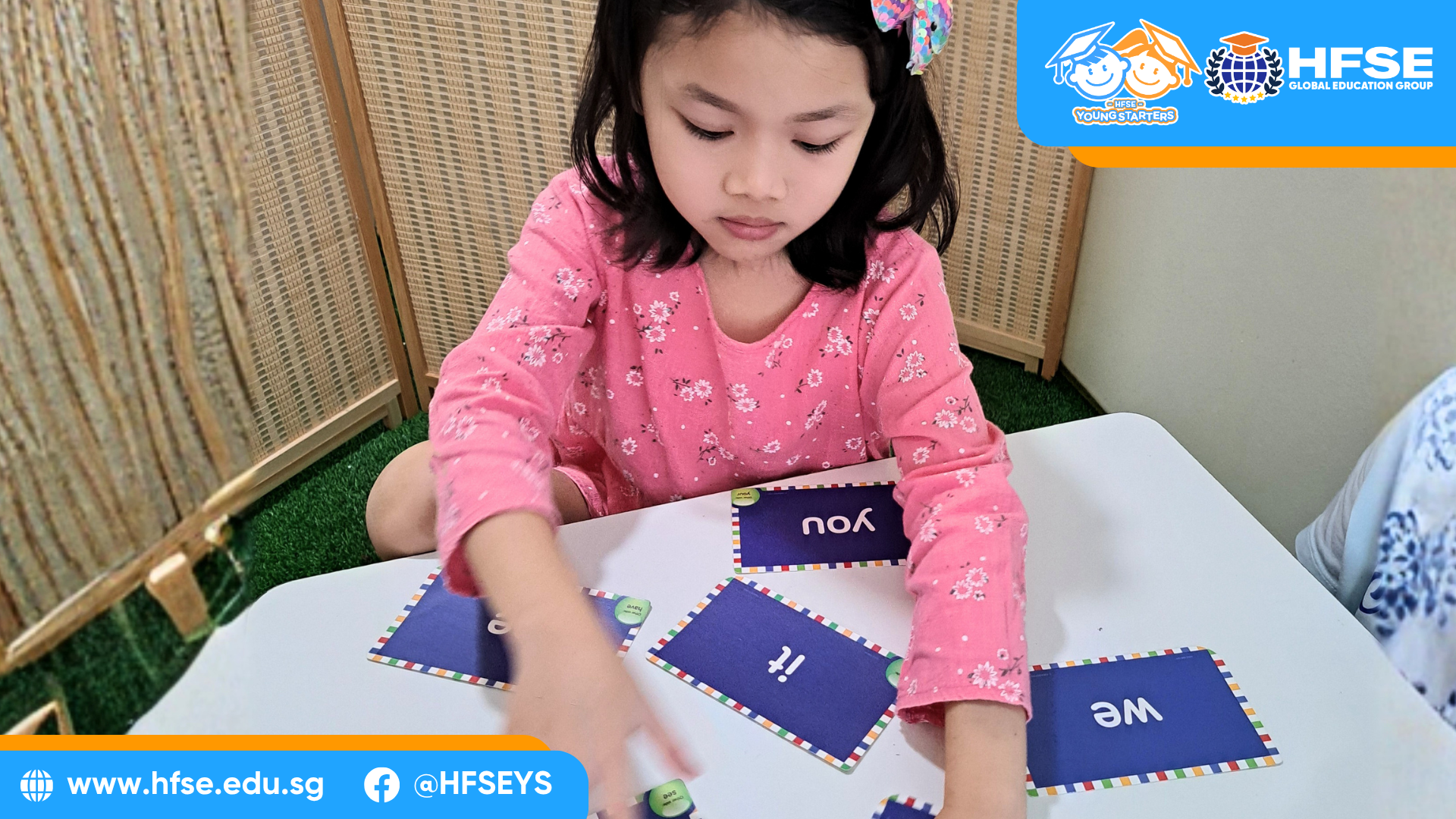
Programmes include creative expression, movement and music, hands on numeracy, language development, and discovery-based activities. Each experience supports learning through play that feels intentional, engaging, and enjoyable.
We believe children learn best when they feel trusted and supported. With care and guidance, children grow into confident learners who feel proud of their progress.
Learning That Feels Like Joy
Play-based learning allows children to take an active role in their learning journey. It honours curiosity and supports whole child development in lasting ways.
At HFSE YoungStarters, we celebrate the power of play. Through play, children become capable, confident, and enthusiastic learners who are ready to grow.
To learn more about HFSE YoungStarters and our nurturing early years environment, visit our Facebook page or contact us at +65 8200 0062 for further enquiries. We look forward to being part of your child’s journey as they learn, grow, and thrive through joyful experiences.