Checkmate! Building Focus Through Chess Enrichment
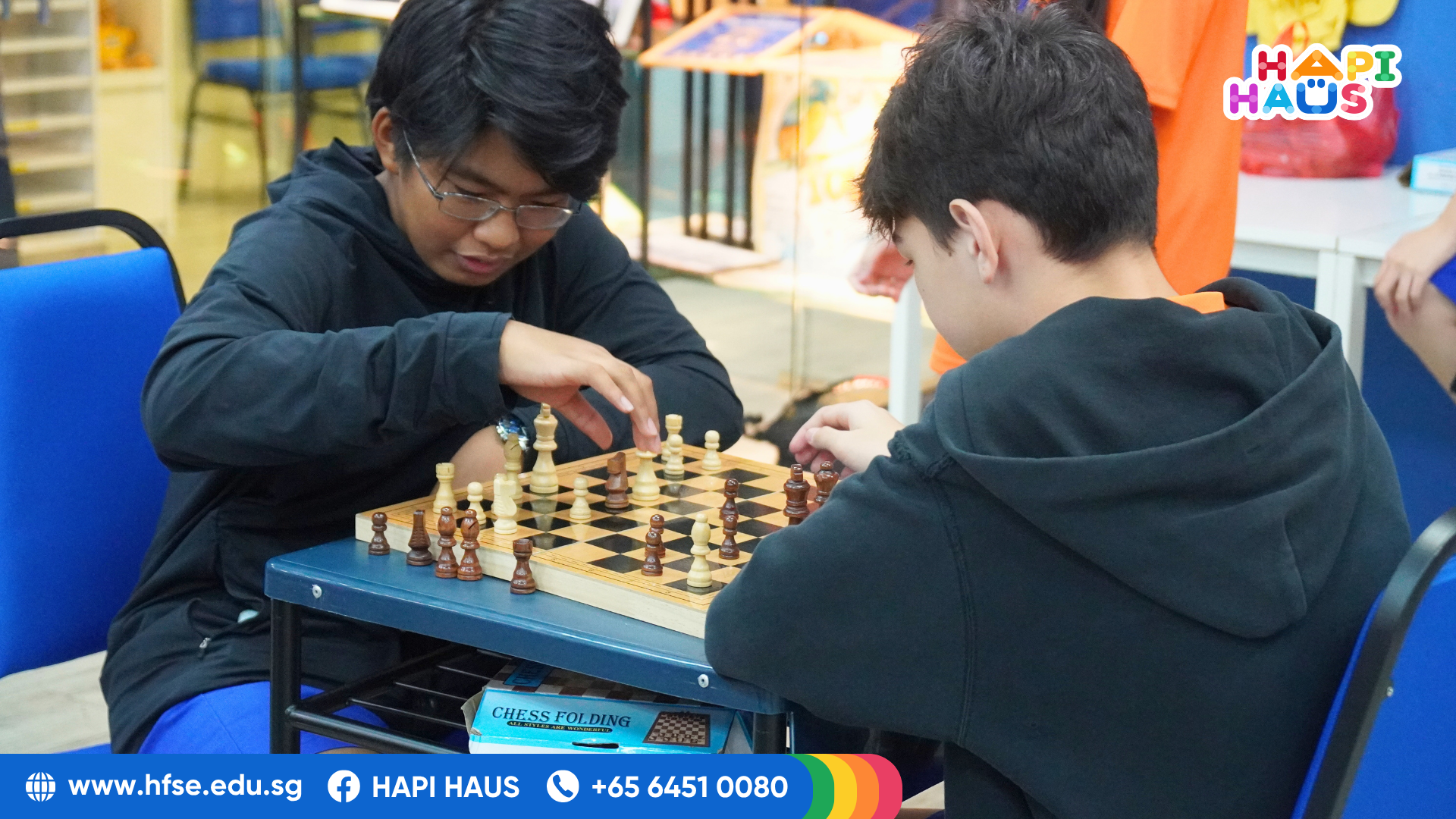
Chess for Children offers much more than learning the rules of a game. It provides young learners with valuable opportunities to strengthen critical thinking, improve concentration, and develop problem-solving skills that can benefit them both in and out of the classroom. More importantly, chess encourages children to think ahead, make thoughtful decisions, and learn from experience.
At HAPI HAUS, we believe meaningful enrichment experiences should nurture both intellectual growth and personal development. Through chess, children learn how to analyse situations, consider different possibilities, and approach challenges with patience and confidence. Consequently, they develop skills that support lifelong learning and success.
Why Chess for Children Matters
A well-designed Chess for Children programme helps children build important cognitive skills in an engaging and enjoyable way. Unlike many activities that rely on chance, chess encourages careful planning, strategic thinking, and logical decision-making.
Each move requires children to evaluate options and consider potential outcomes. Consequently, they learn to think critically before acting. Furthermore, these experiences strengthen their ability to make informed decisions in both academic and everyday situations.
Moreover, chess teaches children that success often comes from preparation, persistence, and thoughtful effort.
Developing Critical Thinking Skills
One of the greatest benefits of Chess for Children is the development of critical thinking skills. Every game presents a series of challenges that require analysis, reasoning, and strategic planning.
As children learn different tactics and strategies, they become better at evaluating situations from multiple perspectives. In addition, they learn to anticipate consequences and make decisions based on logical reasoning rather than impulse.
Therefore, these skills can support learning across various subjects and help children become more confident thinkers.
Improving Focus and Concentration
In today’s fast-paced world, maintaining focus can sometimes be challenging for young learners. However, chess encourages children to remain attentive and engaged throughout the game.
Through Chess for Children, students learn the importance of concentration and sustained attention. They must observe their opponent’s moves, assess the changing game board, and think carefully about their next action.
As a result, children strengthen their ability to focus for extended periods. Similarly, these concentration skills can positively influence classroom learning and academic performance.
Strengthening Problem-Solving Abilities
Chess is often described as a game of problem-solving. Every move creates new situations that require players to evaluate challenges and identify solutions.
A Chess for Children programme encourages children to think creatively and adapt when plans do not go as expected. Rather than becoming discouraged by setbacks, they learn to explore alternative strategies and continue working towards their goals.
Consequently, children develop resilience and confidence in their ability to solve problems independently.
Building Patience, Persistence, and Confidence
Success in chess rarely happens instantly. Instead, players improve through practice, observation, and learning from mistakes.
Through Chess for Children, young learners discover the value of patience and perseverance. They learn that setbacks can become valuable learning experiences and that improvement often comes through consistent effort.
Most importantly, each small success helps build confidence. As children become more comfortable making decisions and overcoming challenges, they develop greater belief in their abilities.
Encouraging Healthy Competition and Sportsmanship
Chess teaches children how to compete respectfully while appreciating the achievements of others. Players learn to win with humility and lose with grace, both of which are valuable qualities that benefit them throughout life.
Similarly, children learn the importance of respecting opponents, following rules, and demonstrating good sportsmanship. Furthermore, these experiences help build character and strengthen social skills in a positive and supportive environment.
As a result, chess becomes more than a game. Instead, it becomes a valuable tool for personal growth.
Helping Young Minds Grow Through Chess
At HAPI HAUS, we believe enrichment programmes should help children develop skills that extend beyond traditional academics. Chess for Children encourages critical thinking, concentration, problem-solving, and resilience while providing an enjoyable and rewarding learning experience.
Through strategic play and guided learning, children develop the confidence to tackle challenges, think independently, and make thoughtful decisions. Ultimately, these skills help prepare them for success both in school and in everyday life.
Interested in learning more about HAPI HAUS and our enrichment programmes?
Complete our Expression of Interest Form to let us know your interest and receive updates on future programme availability. You may also visit our Facebook page or contact us at +65 8200 0062 for further enquiries. We look forward to helping your child build confidence, develop new skills, and reach their full potential.